Category: Uncategorized

Your Kingdom come. Your will be done

Second reading

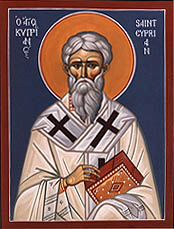
From a treatise on the Lord’s Prayer by Saint Cyprian, bishop and martyr

Your kingdom come. Your will be done

The prayer Stcypriancontinues: Your Kingdom come. We pray that God’s kingdom will become present for us in the same way that we ask for his name to be hallowed among us. For when does God not reign, when could there be in him a beginning of what always was and what will never cease to be? What we pray for is that the kingdom promised to us by God will come, the kingdom won by Christ’s blood and passion. Then we who formerly were slaves in this world will reign from now on under the dominion of Christ, in accordance with his promise: Come, O blessed of my Father, receive the Kingdom which was prepared for you from the foundation of the world.

However, my dear friends, it could also be that the kingdom of God whose coming we daily wish for is Christ himself, since it is his coming that we long for. He is our resurrection, since we rise again in him; so too he can be thought of as the kingdom of God because we are to reign in him. And it is good that we pray for God’s kingdom; for though it is a heavenly Kingdom, it is also an earthly one. But those who have already renounced the world are made greater by holding positions of authority in that kingdom.

After this we add: Your will be done on earth as it is in heaven; we pray not that God should do his will, but that we may carry out his will. How could anyone prevent the Lord from doing what he wills? But in our prayer we ask that God’s will be done in us, because the devil throws up obstacles to prevent our mind and our conduct from obeying God in all things. So if his will is to be done in us we have need of his will, that is, his help and protection. No one can be strong by his own strength or secure save by God’s mercy and forgiveness. Even the Lord, to show the weakness of the human nature which he bore, said: Father, if it be possible, let this cup pass from me, and then, by way of giving example to his disciples that they should do God’s will and not their own, he added: Nevertheless, not as I will, but as you will.

All Christ did, all he taught, was the will of God. Humility in our daily lives, an unwavering faith, a moral sense of modesty in conversation, justice in acts, mercy in deed, discipline, refusal to harm others, a readiness to suffer harm, peaceableness with our brothers, a wholehearted love of the Lord, loving in him what is of the Father, fearing him because he is God, preferring nothing to him who preferred nothing to us, clinging tenaciously to his love, standing by his cross with loyalty and courage whenever there is any conflict involving his honor and his name, manifesting in our speech the constancy of our profession and under torture confidence for the fight, and in dying the endurance for which we will be crowned—this is what it means to wish to be a coheir with Christ, to keep God’s command; this is what it means to do the will of the Father.

Holy Easter

Loader Loading...
EAD Logo Taking too long?

Reload Reload document
| Open Open in new tab

Download [173.58 KB]

“I send you my greetings of Happy Easter:
praying for your resurrection in the Divine Will.
I place you in the Divine Volition to make you holy
because the earth is not for you, but Heaven is”.

We pray the intercession Servant of God Luisa Piccarreta this  Easter for the Resurrection of the Divine Will.

Fiat

Father Bernardino Bucci
and Giuseppe Lacerenza

From The Three Appeals – To The Pope, To Priests And To Entire World

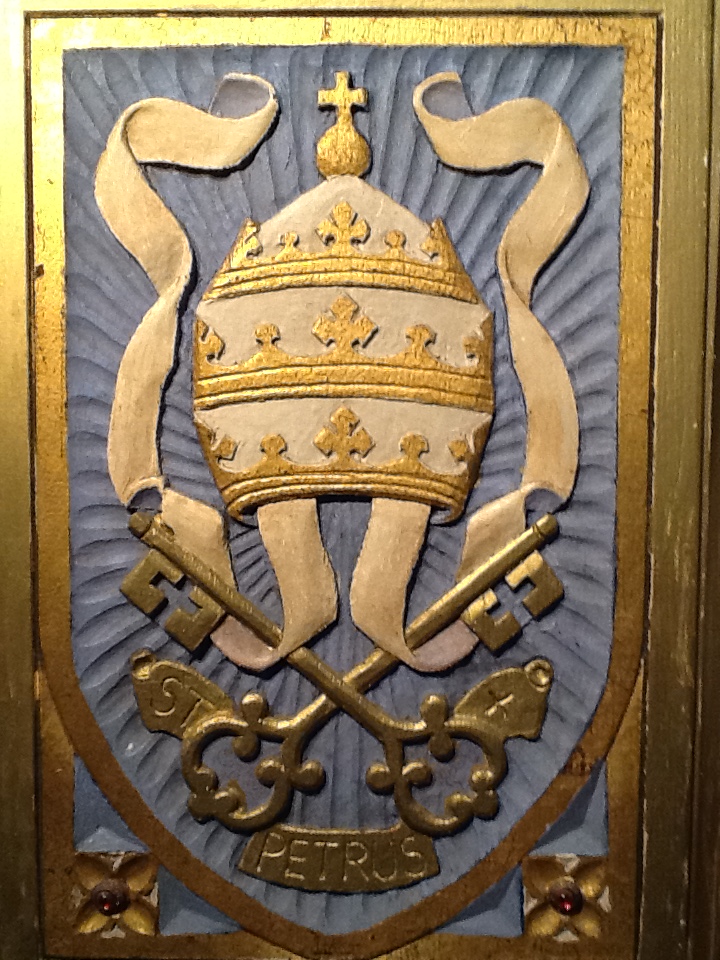
Peter

The Three Appeals

From the writings of the Servant of God, Luisa Piccarreta


And in the first place, I appeal to the HIGHEST HIERARCH, to the ROMAN PONTIFF, to HIS HOLINESS, to the representative of the Holy Church, and therefore the representative of the KINGDOM OF THE DIVINE WILL. At his holy feet, this little, tiny child places this Kingdom, so that he dominate It and make It known, and with his paternal and authoritative voice, call his sons to live in this Kingdom so holy.

May the Sun of the SUPREME “FIAT” invest him and form the first Sun of the Divine Volition in Its Representative on earth; and forming Its primary Life in him who is the Head of all, It will spread Its interminable rays in all the world; and eclipsing all with Its Light, It will form one flock and one Shepherd

The second appeal I make to all PRIESTS. Prostrate at the feet of each one, I pray, I implore them to interest themselves in knowing the Divine Will. Take your first movement, your first act from It; rather, enclose yourselves in the “FIAT,” and you will feel how sweet and dear Its Life is. Draw from It all your workings; you will feel a Divine strength in you, a voice that always speaks, that will say admirable things to you that you have never heard. You will feel a light that will eclipse all your evils, and eclipsing the peoples, will give you the dominion over them.   How many labors you do without fruit, because the Life of the Divine Will is lacking. You have broken a bread for the peoples without the leaven of the “FIAT”; and they therefore, in eating it, have found it hard, almost indigestible; and not feeling the Life in themselves, they do not submit to your teachings. Therefore, you eat this bread of the Divine “FIAT!” Thus you will have sufficient bread to give to the peoples. Thus you will form with all, one single Life and one single Will.

The third appeal I make to ALL, to the entire world, for you are all my brothers and sisters and my children. Do you know why I am calling all?  Because I want to give to all the Life of the Divine Will. This is more than air that we can all breathe. It is as Sun from which we can all receive the good of the light; It is as palpitation of the heart that wants to beat in all. And, as a little baby, I want, I yearn for you to take the Life of the “FIAT”…Oh, if you knew how many goods you would receive; you would consume your life to make It reign in all of you! This little, tiny one wants to tell you another secret that Jesus has confided to her; and I tell you it so that you give me your will, and in exchange you will receive that of God which will make you happy in soul and in body.

…Therefore, everyone: listen to this little, tiny one…Do not make her sigh any more!…Tell me, please: “So be it, so be it;

we all want the KINGDOM OF THE DIVINE WILL.”


Corato (Bari, Italy), 1924

LUISA, THE LITTLE DAUGHTER OF THE DIVINE WILL

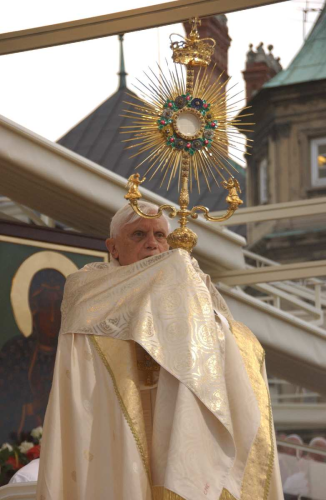
Benedict 1

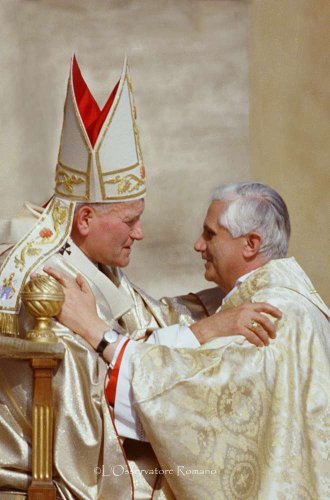
JP2 & CR

A CATECHISM ON THE DIVINE WILL

On God As Creator of Heaven and Earth

“In the work of creation, God is seen as the almighty Father who by his eternal Word brings into existence a universe of goodness, harmony and beauty”

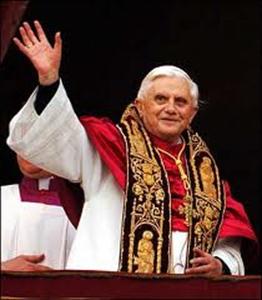
Vatican City, February 06, 2013
052212_1437_HOMILYOFHIS5.jpg

Dear Brothers and Sisters,

The Creed, which begins by describing God as “Almighty Father,” as we meditated on last week, then adds that He is the “Creator of heaven and earth,” and thus takes up the Bible’s opening line. In the first verse of Sacred Scripture, we read: “In the beginning God created the heavens and the earth” (Genesis 1:1): God is the origin of all things and his omnipotence as a loving Father unfolds in the beauty of creation.

God manifests himself as Father in creation, inasmuch as He is the origin of life, and in creating, reveals his omnipotence. The images used in Sacred Scripture in this regard are very powerful (cf. Is 40:12; 45:18; 48:13; Psalm 104:2.5; 135.7, Prov 8:27-29; Job 38-39). He, like a good and powerful Father, takes care of what he has created with a love and loyalty that never fail or diminish, as the Psalms repeatedly affirm (cf. Ps 57:11; 108:5; 36:6). Thus, the creation becomes a place in which to know and recognize the omnipotence of the Lord and his goodness, and becomes an appeal to faith as believers so that we proclaim God as Creator. “By faith”, writes the author of the Letter to the Hebrews, “we understand that the worlds were prepared by the word of God, so that what is seen was made from things that are not visible”(11:3). Faith implies, therefore, knowing how to recognize the invisible by identifying the traces of it in the visible world. The believer can read the great book of nature and understand its language (cf. Ps 19:2-5), but the Word of revelation, which stimulates faith, is necessary for man to achieve full awareness of the reality of God as Creator and Father. It is in the book of Sacred Scripture that human intelligence can find, in the light of faith, the interpretative key to understand the world. In particular, the first chapter of Genesis holds a special place, with its solemn presentation of the divine creative act that unfolds in seven days: in six days God completes creation and on the seventh day, the Sabbath, he ceases from all activity and rests. A day of freedom for all, a day of communion with God. And so, with this image, the book of Genesis tells us that God’s first thought was to find a love responding to His love. The second thought is then create a material world in which to place this love, these creatures who answer him in freedom. This structure, therefore, causes the text to be marked by some significant repetitions. Six times, for example, the phrase is repeated: “God saw that it was good” (vv. 4.10.12.18.21.25), and finally, the seventh time, after the creation of man: “God saw everything that he had made, and behold, it was very good” (v. 31). Everything that God creates is good and beautiful, full of wisdom and love, the creative action of God brings order, sets things in harmony, bestows beauty. In the Genesis account then, it emerges that the Lord creates by his word: ten times the texts uses the expression “God said” (vv. 3.6.9.11.14.20.24.26.28.29). It is the word, the Logos of God who is the origin of the reality of the world and by saying, “God said,” and it was so, it emphasizes the effective power of the Word of God. As the psalmist sings: “By the word of the Lord the heavens were made, by the breath of his mouth all their host … because he spoke and all things were created, he commanded, and it was done” (33:6.9). Life arises, the world exists, because everything obeys the divine Word.

But our question today is: in the age of science and technology, does it still make sense to speak of creation? How should we understand the Genesis narratives? The Bible is not intended as a natural science manual; its intention instead is to teach us the authentic and profound truth of things. The fundamental truth that the Genesis stories reveal to us is that the world is not a collection of contrasting forces, but has its origin and its stability in the Logos, in God’s eternal Reason, who continues to sustain the universe. There is a plan for the world that arises from this Reason, from the creating Spirit. Believing that such a reality is behind all this, illuminates every aspect of life and gives us the courage to face the adventure of life with confidence and hope. Thus, the Scriptures tell us that the origin of being, of the world, our origin is not irrationality or necessity, but rather reason and love and freedom. Hence the alternative: either priority of the irrational, of necessity, or priority of reason, freedom and love. We believe in this latter position.

But I would like to say a word about that which is the apex of all creation: man and woman, the human being, the only being “capable of knowing and loving his Creator” (Pastoral Constitution. Gaudium et spes, 12). The Psalmist, gazing on the skies, asks: “When I see your heavens, the work of thy fingers, the moon and the stars which you have established, what is man that you remember him, the son of man that you care for him?”(8:4-5). The human being, created by God with love, is a small thing before the immensity of the universe; sometimes, when gazing, fascinated, upon the huge expanses of the sky, we too have perceived our limitedness. The human being is inhabited by this paradox: our smallness and our frailty coexist with the magnitude of what the eternal love of God has willed for us.052212_1437_HOMILYOFHIS4.jpg
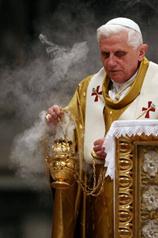
The creation stories in Genesis also introduce us to this mysterious area, helping us to know God’s plan for man. First of all they affirm that God formed man of the dust of the earth (cf. Gen 2:7). This means that we are not God, we did not make ourselves, we are earth; but it also means that we come from the good soil, by the work of the good Creator. Added to this is another fundamental reality: all human beings are dust, beyond the distinctions made by culture and history, beyond any social difference; we are one humanity moulded with the one soil of God. Then there is a second element: the human being has its origin in God breathing the breath of life into the body moulded from the earth (cf. Gen 2:7). The human being is made in the image and likeness of God (cf. Gen 1:26-27). So we all carry within us God’s breath of life and every human life – the Bible tells us – is under God’s special protection. This is the most profound reason for the inviolability of human dignity against any attempt to judge the person according to utilitarian and power-based criteria. Being in the image and likeness of God means, then, that man is not closed in on himself, but finds in God his essential point of reference.

In the first chapters of the Book of Genesis we find two significant images: the garden with the tree of knowledge of good and evil and the serpent (cf. 2:15-17; 3,1-5). The garden tells us that the reality in which God has placed the human being is not a wild forest, but a place that He protects, nourishes and sustains; and man must recognize the world not as property to be plundered and exploited, but as a gift of the Creator, a sign of His saving will, a gift to cultivate and care for, to grow and develop with respect, in harmony, following its rhythms and logic, according to the plan of God (cf. Gen 2:8-15). Then, the serpent is a figure derived from oriental fertility cults, which appealed to Israel and were a constant temptation to abandon the mysterious covenant with God. In light of this, the Sacred Scripture presents the temptation that Adam and Eve undergo as the essence of temptation and of sin. What does the serpent say, in fact? He does not deny God, but slips in a subtle question: “Is it true that God has said ‘You shall not eat of any tree of the garden?'”(Gen 3:1). In this way, the serpent raises the suspicion that the covenant with God is like a chain that binds him, depriving him of freedom and of the most beautiful and precious things in life. The temptation becomes to build their own world in which to live, to not accept the limitations of being a creature, the limits of good and evil, of morality; their dependence on the love of God the Creator is seen as a burden to be shaken off. This is always the essence of temptation. But when it distorts the relationship with God, with a lie, putting oneself in His place, all the other relationships are altered. Then the other becomes a rival, a threat: Adam, having succumbed to the temptation, immediately accuses Eve (cf. Gen 3:12); the two hide from the sight of that God with whom they used to converse in friendship (cf. 3:8-10); the world is no longer a garden to live in in harmony, but a place to be exploited and which conceals pitfalls (cf. 3:14-19); envy and hatred towards each other enter into the heart of man: one example is that of Cain, who kills his brother Abel (cf. 4:3-9). By turning against his Creator, in reality man turns against himself, he denies his origin and therefore his truth; and evil enters into the world, with its painful chain of sorrow and death. And so what God had created was good, in fact, very good; and after this free decision of man for a lie and against the truth, evil enters the world.

In the creation stories, I would like to highlight one last teaching: sin begets sin and all the sins of history are interconnected. This aspect leads us to talk about what we call “original sin.” What is the meaning of this reality, so difficult to understand? I would like offer just a few elements. First, we must consider that no man is closed in on himself, no one can live only in and for himself; we receive life from the other and not just at the moment of our birth, but every day. The human being is relation: I am myself only in you and through you, in the relationship of love with the Thou of God and the you of others. Well, sin is to upset or destroy the relationship with God, this is its essence: to destroy the relationship with God, the fundamental relationship, to put oneself in the place of God. The Catechism of the Catholic Church states that with the first sin, man “chose himself over and against God, against the requirements of his creaturely status and therefore against his own good” (no. 398). When the fundamental relationship is disturbed, all the other relational poles are compromised or destroyed, sin ruin relationships, and in this way ruins everything, because we are relation. Now, if the relational structure of humanity is troubled from the start, every man walks into a world marked by this disturbance of relationships, he enters a world disturbed by sin, of which he is marked personally; the initial sin attacks and injures human nature (cf. Catechism of the Catholic Church, 404-406). And man alone, one alone cannot get out of this situation, he cannot redeem himself alone; only the Creator Himself can restore the right relationships. Only if He from whom we have strayed comes to us and takes us by the hand with love, can the right relationships be stitched together again. This is done in Jesus Christ, who goes in exactly the opposite direction of Adam, as described in the hymn in the second chapter of St. Paul’s Letter to the Philippians (2:5-11): while Adam does not acknowledge his creaturely status and wants to put himself in the place of God, Jesus, the Son of God, is in a perfect filial relationship with the Father, he lowers himself, he becomes the servant, he goes the way of humbling himself to death on the cross, to reorder our relations with God. The Cross of Christ becomes the new Tree of Life.

Dear brothers and sisters, to live by faith is to recognize the greatness of God and accept our smallness, our creaturely condition, letting the Lord fill it with His love and so allowing our true greatness to grow. Evil, with its burden of pain and suffering, is a mystery that is illuminated by the light of faith, which gives us the certainty of being able to be freed: the certainty that it is good to be a human being.

* * *

Dear Brothers and Sisters,

In our continuing catechesis during this Year of Faith, we now reflect on the Creed’s description of God as “Creator of heaven and earth”. In the work of creation, God is seen as the almighty Father who by his eternal Word brings into existence a universe of goodness, harmony and beauty. The world thus has meaning as a part of the divine plan, a plan which in a special way embraces man and woman as the culmination of God’s creative activity. The Scriptures teach us that man was created in the image and likeness of God, formed from the dust of the earth. Here we see the basis not only of the unity of the human family but also of our inviolable human dignity. We also see something of the mystery of man as a finite creature called to a sublime role in God’s eternal plan. The tragedy of Adam’s sin, by falsifying our original relationship with God, has affected our relationship with one another and the world itself. Through the saving obedience of Christ, the new Adam, God himself has justified us and enabled us to live in freedom as his beloved sons and daughters.

I offer a warm welcome to all the English-speaking visitors present at today’s Audience, including those from England, Ireland and the United States. May your visit to the tombs of the Apostles Peter and Paul inspire you never to place anything before the love of Christ. Upon all of you, I invoke God’s blessings of joy and peace
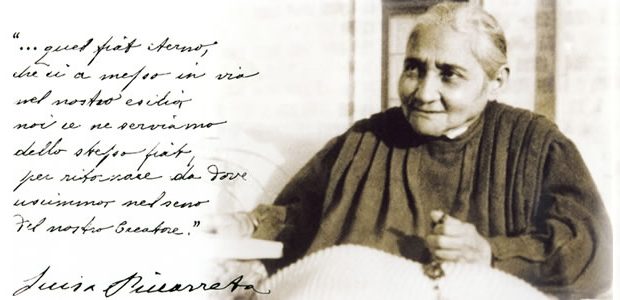
My birth in time was the outpouring of Love

Merry Christmas

Feast of Christmas

“My birth in time was the outpouring of Love

of the Most Holy Trinity toward creatures.

In an outpouring of Love of My Mother

I was born from Her womb,

and in an outpouring of Love

I Am reborn in souls.
But this outpouring is formed by desire.

As soon as the soul begins to desire Me,

I Am conceived;

the more she advances in her desire,

the more I keep growing in the soul;

and when this desire fills her whole interior

and reaches the point of overflowing outside,

then I Am reborn in the whole of man –

in his mind, in his mouth, in his works and steps...
S.G. Luisa Piccarreta (Volume VI, December 24, 1903)

12/25/08 – Vol. 8  How to make Jesus be born and grow in your hearts.

Finding myself in my usual state, I was longing for little Baby Jesus, and after many hardships, He made Himself seen in my interior as a little Baby, and told me: “My daughter, the best way to make Me be born in one’s own heart, is to empty oneself of everything, because in finding empty space, I can place all my goods in it. And only then can I remain in it forever, if there is room to be able to carry all that belongs to Me, all that is my own. A person who went to live in the house of someone else, could be called happy only if he found empty space in which to be able to put all of his belongings; otherwise, he would be unhappy. So I am.

The second thing in order to make Me be born and to increase my happiness, is that everything the soul contains, both internal and external – everything, must be done for Me; everything must serve to honor Me, to execute my orders. If only one thing, one thought, one word, is not for Me, I feel unhappy, and while I should be the master, they make Me a slave. Can I tolerate all this?

The third one is heroic love, magnified love, love of sacrifice. These three loves make my happiness grow in a marvelous way, because they render the soul capable of works which are superior to her strengths, as she does them with My strength alone. They will expand her, by making not only her, but also others love Me. And she will reach the point of enduring anything, even death, in order to triumph in everything, and be able to say to Me: ‘I have nothing else; everything is only love for You.’ In this way, she will not only make Me be born, but will make Me grow, and will form a beautiful paradise in her heart.”

As He was saying this, I looked at Him, and from little, in one instant He became big, in such a way that I remained completely filled with Him. Then everything disappeared.

A BEAUTIFUL CATECHESIS ON THE DIVINE WILL

Advent and God’s benevolent plan

Marking the first week of Advent and the beginning of the new liturgical year, Pope Benedict XVI dedicated his general audience catechesis to living the season as an act of faith in God’s benevolent plan for humanity.

Below a Vatican Radio translation of the Holy Father’s catechesis

Dear Brothers and Sisters,

At the beginning of his letter to the Christians of Ephesus (cf. 1, 3-14), the apostle Paul raises a prayer of blessing God, the Father of our Lord Jesus Christ – a prayer that we have just heard – that introduces us to live the season of Advent, in the context of the faith. The theme of this hymn of praise is God’s plan for man, defined in terms full of joy, wonder and gratitude, as a “benevolent plan” (see 9), mercy and love.

Why does the Apostle raise this blessing God, from the depths of his heart? Because he looks at his work in the history of salvation, culminating in the incarnation, death and resurrection of Jesus, and he contemplates how Heavenly Father has chosen us even before the creation of the world, to be his sons in his only-begotten Son, Jesus Christ (cf. Rom 8:14 s.; Gal 4:4 f.). Therefore we exist from eternity in God, in a major project that God has kept within himself and decided to implement and to reveal in “the fullness of time” (cf. Eph 1:10). St. Paul helps us to understand, then, how all creation and, in particular, man and woman are not the result of chance, but a loving plan to respond to the eternal reason of God with the creative and redemptive power of his Word which creates the world. This first statement reminds us that our vocation is not simply to exist in the world, being inserted in history, or even just being a creature of God, it is something greater: it is being chosen by God, even before the creation of the world, in the Son, Jesus Christ. In Him we exist, so to speak, already. God contemplates us in Christ, as adopted children. The “benevolent plan” of God, which is qualified by the Apostle as a “loving plan” (Eph 1:5), is called “the mystery” of Divine will (v. 9), hidden and now revealed in the Person and work of Christ. The divine initiative precedes any human response: it is a free gift of His love that surrounds us and transforms us.

But what is the ultimate goal of this mysterious plan? What is the centre of God’s will? It is – Saint Paul tells us – to “bring all things back to Christ, the only head” (v. 10). In this expression we find one of the central formulations of the New Testament that make us understand the plan of God, his plan of love for humanity, a formulation in the second century, St. Irenaeus of Lyons placed at the core of his Christology : “to restore ” all reality in Christ. Perhaps some of you remember the formula used by Pope St. Pius X for the consecration of the world to the Sacred Heart of Jesus: “Instaurare omnia in Christo“, a formula that refers to this Pauline expression, and that was also the motto of this holy Pontiff . The Apostle, however, speaks more specifically of restoring the universe in Christ, and this means that in the great design of creation and history, Christ stands as the center of the entire journey of the world, the central pillar, that attracts the whole of reality to itself, to overcome dispersion and limitation and lead everything to the fullness desired by God (cf. Eph 1:23).

This “benevolent plan” has not been kept, so to speak, in the silence of God in the height of his heaven, but He has made it known by engaging with the man, to whom He has not only revealed something, but His very self. He has not simply communicated a set of truths, but He communicated Himself to us, to the point of becoming one of us, to being incarnate. The Second Vatican Council in its Dogmatic Constitution Dei Verbum affirms: ” In His goodness and wisdom God chose to reveal Himself and to make known to us the hidden purpose of His will (see Eph. 1:9) by which through Christ, the Word made flesh, man might in the Holy Spirit have access to the Father and come to share in the divine nature “(n. 2). God not only says something, He communicates with us, draws us into the divine nature, so that we are involved in the divine nature, deified. God reveals His great plan of love engaging with man approaching him to the point of becoming himself is a man. The Council continues: “The invisible God out of the abundance of His love speaks to men as friends (see Ex. 33:11; John 15:14-15) and lives among them (see Bar. 3:38), so that He may invite and take them into fellowship with Himself “(ibid.). By his intelligence and abilities alone man could not have reached this illuminating revelation of God’s love, it is God who has opened up His heaven and lowered himself to lead man into the abyss of his love.

As St. Paul writes to the Christians of Corinth: “What eye has not seen, and ear has not heard, and what has not entered the human heart, what God has prepared for those who love him,” this God has revealed to us through the Spirit.For the Spirit scrutinizes everything, even the depths of God”(2:9-10). And St. John Chrysostom, in a famous comment on the beginning of the Letter to the Ephesians, invites us to enjoy all the beauty of this “benevolent plan” of God revealed in Christ, and St. John Chrysostom says: ” What are you lacking? You have become immortal, you have become free, you have become a child, you have become righteous, you are a brother, you have become a joint heir, to reign with Christ, with Christ you are glorified. Everything is given to us, and – as it is written – “how will he not also give us everything else along with him?” (Rom 8:32). Your firstfruits (cf. 1 Cor 15,20.23) is adored by angels […]: what do you miss? “(PG 62.11).

This communion in Christ through the Holy Spirit, offered by God to all men with the light of Revelation, is not something that overlaps with our humanity, but it is the fulfilment of the deepest human longings, of the desire for infinity and fullness that dwells in the depths of the human being, and opens it up not to a temporary and limited happiness, but eternal. St. Bonaventure, referring to God who reveals Himself and speaks to us through Scripture to lead us to Him, says this: “Sacred Scripture is […] the book in which the words of eternal life are written so that not only we believe, but may also possess eternal life, in which we shall see, we shall love and all our wishes shall be realized “(Breviloquium, Ext., Opera Omnia V, 201S.). And finally, Blessed Pope John Paul II recalled also that – and I quote – ” Revelation has set within history a point of reference which cannot be ignored if the mystery of human life is to be known. Yet this knowledge refers back constantly to the mystery of God which the human mind cannot exhaust but can only receive and embrace in faith “(Encyclical Fides et Ratio, 14).

In this perspective, what is then, the act of faith? It is man’s response to God’s Revelation, which is made known, which shows His loving plan for humanity, and is, to use an expression of St. Augustine, allowing ourselves be grasped by the truth that is God, a truth that is love . This is why St. Paul emphasizes that we owe God, who has revealed His mystery, “obedience of faith” (Rom 16:26; see 1.5, 2 Cor 10: 5-6), the attitude with which man commits his whole self freely to God, offering the full submission of intellect and will to God who reveals, and freely assenting to the truth revealed by Him” (Dei Verbum, 5). Obedience is not an act of coercion, it letting go, surrendering to the ocean of God’s goodness All this leads to a fundamental change in the way we deal with the whole of reality, everything appears in a new light, it is therefore a true “conversion,” faith is a “change of mentality” because the God who has revealed Himself in Christ, and has made known His plan, seizes us, draws us to Himself, becomes the meaning that supports life, the rock on which it can find stability. In the Old Testament we find an intense expression on faith, which God entrusts the prophet Isaiah to communicate to the king of Judah, Ahaz. God says: “Unless your faith is firm you shall not be firm” (Is 7.9 b). There is therefore a link between being and understanding that expresses how faith is a welcoming into our lives God’s vision of reality, letting God guide us through His Word and Sacraments to understand what we must do, the path we must take, how to live. At the same time, however, it is precisely understanding according to God, seeing with His eyes that makes our lives more solid, which allows us to “stand”, not to fall.

Dear friends, Advent, the liturgical season that we have just begun and that prepares us for Christmas, places us before a the luminous mystery of the coming of the Son of God, the great “Benevolent Plan” with which he wants to draw us to Himself, to help us live in full communion of joy and peace with Him Advent invites us once again, in the midst of many difficulties, to renew our awareness that God is present: He came into the world, becoming a man like us , to bring His plan of love to fullness. And God demands that we become a sign of his action in the world. Through our faith, our hope, our love, He wants to enter the world again and again He wants to shine His light in our night. Thank you.

On Advent

“The Virgin Mary Perfectly Incarnates the Spirit of Advent”

VATICAN CITY, DEC. 2, 2012 -Address Benedict XVI gave on Sunday before and after praying the midday Angelus in St. Peter’s Square.

Dear brothers and sisters!

Today the Church begins a new liturgical year, a journey that is subsequently enriched by the Year of Faith, which we observe 50 years after the opening of the Second Vatican Council. The first part of this journey is Advent, constituted, in the Roman Rite, by the 4 weeks that precede the Christmas of the Lord, that is, the mystery of the Incarnation. The word “advent” means “coming” or “presence.” In the ancient world it indicated the visit of the king or emperor to a province; in the language of Christianity it refers to the coming of God, to his presence in the world; a mystery that involves the entire cosmos and all of history, but that knows 2 culminating moments: the first and the Second Coming of Jesus Christ. The first is precisely the Incarnation; the second his glorious return at the end of time. These 2 moments that are chronologically distant – and it is not given to us to know how distant – touch each other in their depths, because with his death and resurrection Jesus has already realized that transformation of man and the cosmos that is the final goal of creation. But before the end, it is necessary that the Gospel be preached to all nations, Jesus says in the Gospel of St. Mark (Mark 13:10). The Lord’s coming continues, the world must be penetrated by his presence.

Our collaboration is required in this permanent coming of the Lord in the proclamation of the Gospel; and the Church, which is like the Bride to be, the Betrothed of the crucified and risen Lamb of God (Apocalypse 21:9), in communion with her Lord collaborates in this coming of the Lord in which his glorious return already begins.

The Word of God reminds us of all this today, describing the conduct that is necessary to ready for the Lord’s coming. In the Gospel of Luke Jesus says to the disciples: “Do not let your hearts be weighed by dissipation, drunkenness and the troubles of life … be vigilant, therefore, praying at all times” (Luke 21:34, 36). So, sobriety and prayer. And the apostle Paul also invites us to “grow and superabound in love” among ourselves and toward others, to make our hearts strong and blameless in sanctity (1 Thessalonians 3:12-13). In the midst of the upheavals of the world, or in the deserts of indifference and materialism, Christians welcome the salvation that comes from God and bear witness to it with a different way of living, like a city set on a hill. “In those days,” the prophet Jeremiah announces, “Jerusalem will live in peace and be called ‘the Lord our justice’” (33:16). The community of believers is a sign of God, of his justice, which is already present and active in history but is not yet fully realized, and because of this is always awaited, invoked, sought with patience and courage.

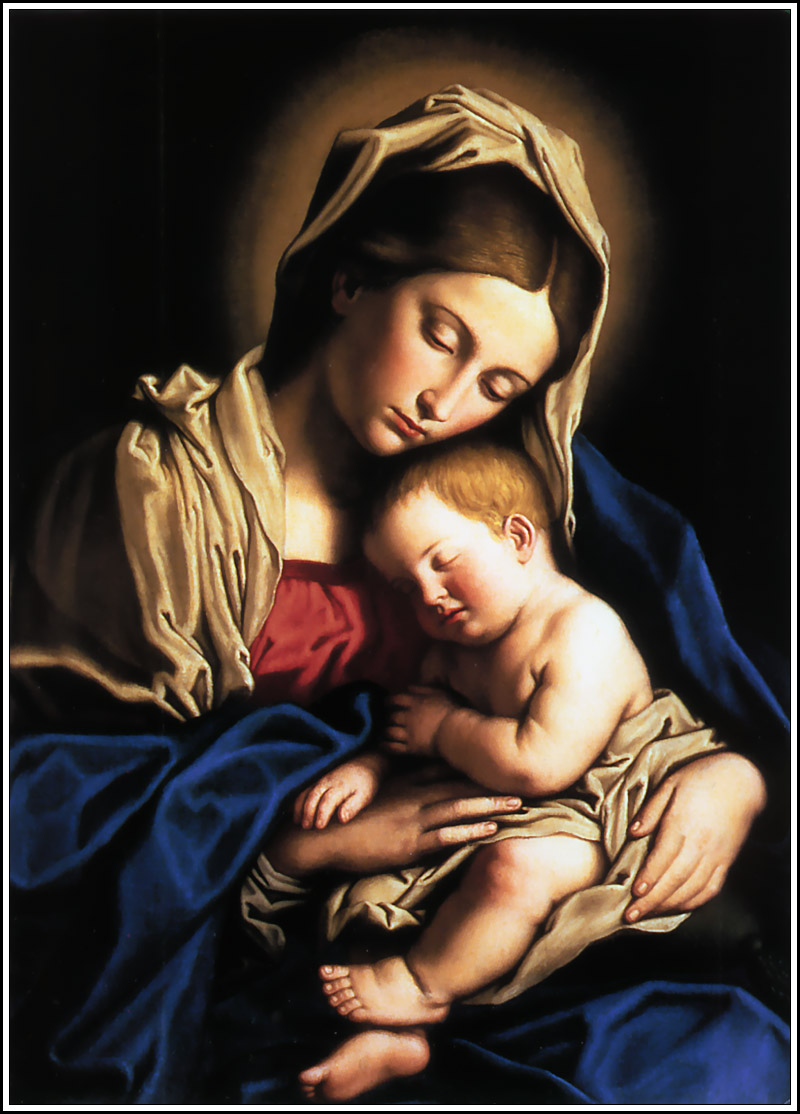
The Virgin Mary perfectly incarnates the spirit of Advent; this spirit is one of listening to God, of profound desire to do his will, of joyous service to our neighbor. Letting ourselves be guided by her, so that the God who comes does not find us closed and distracted, but can, in each one of us, extend a part of his Kingdom of love, of justice and of peace.

Tolerance is Not a Christian Virtue

Tolerance is Not a Christian Virtue


“We need to remember that tolerance is not a Christian virtue. Charity, justice, mercy, prudence, honesty — these are Christian virtues. And obviously, in a diverse community, tolerance is an important working principle. But it’s never an end itself. In fact, tolerating grave evil within a society is itself a form of serious evil. Likewise, democratic pluralism does not mean that Catholics should be quiet in public about serious moral issues because of some misguided sense of good manners. A healthy democracy requires vigorous moral debate to survive. Real pluralism demands that people of strong beliefs will advance their convictions in the public square — peacefully, legally and respectfully, but energetically and without embarrassment. Anything less is bad citizenship and a form of theft from the public conversation.”

– Archbishop Charles Chaput


The Fount of True Justice and of True Peace

VOL. 12 – October 14, 1918
True Peace comes from God.

The greatest chastisement is the triumph of the evil. 

Continuing in my usual state, full of bitternesses and privations, as my sweet Jesus came, He told me: “My daughter, governments feel the ground missing under their feet. I will use all means to make them surrender, to make them come back to their senses, and to make them know that only from Me can they hope for true peace – and lasting peace.

So, now I humiliate one, now another; now I make them become friends, now enemies. I will be up to all sorts of things; I will make their arms fall off; I will do unforeseen and unexpected things in order to confuse them, and make them comprehend the instability of human things and of themselves – to make them comprehend that God alone is the stable Being from Whom they can expect every good, and that if they want Justice and Peace, they must come to the Fount of True Justice and of True Peace.

Otherwise, they will not be able to do anything; they will continue to struggle; and if it may seem that they will arrange peace, it will not be lasting, and the brawls will start again, more strongly. My daughter, the way things are now, only My Omnipotent finger can fix them.

At the right time I will place it, but great trials are needed and will occur in the world. Therefore, it takes great patience.”
Then, with a more moving and sorrowful tone, He added: “My daughter, the greatest chastisement is the triumph of the evil. More purges are needed, and through their triumph the evil will purge My Church. Then I will crush them and scatter them, like dust in the wind.

Therefore, do not be troubled at the triumphs that you hear, but cry with Me over their sad lot.”

Fiat!