…after a little while He came back in the act of His Passion when He was covered with opprobriums, with ignominies, with spit, and I said to Him: ‘Lord, teach me what I could do in order to move these opprobriums away from You, and give You back honors, praises and adorations.’ And He said to me: “My daughter, around my throne there is a void, and this void must be filled with the glory that Creation owes Me. So, one who sees Me despised by the other creatures, and honors Me, not only for herself, but for others, makes honors for Me arise again in this void. When she sees Me unloved, and loves Me, she makes love for Me arise again.When she sees that I fill creatures with benefits, while they are not grateful to Me and do not even thank Me, and she is grateful to Me as if those benefits were given to her, and she thanks Me, she makes the flower of gratitude and of thanksgiving arise again for Me in this void; and so with all the rest that Creation owes Me, but denies to Me with awful ingratitude. Now, since all this is an overflow of the charity of the soul – who gives Me not only what she herself owes Me, but does for others what overflows from herself – since this glory and these flowers that she sends to Me into this void around my throne are the fruit of charity, they receive a tint more beautiful and more pleasing to Me.”
The Queen of Heaven in the Kingdom of the Divine Will departs for the Temple and gives example of Total Triumph in the Sacrifice.
The soul to the Triumphant Queen:
Celestial Mama, today I come to prostrate myself before You, to ask for Your Invincible Strength in all my pains; and You know how my heart is filled with them, to the point of feeling drowned with pains. O please! If You love so much to act as my Mother, take my heart in Your hands and pour into it the Love, the Grace and the Strength to triumph in my pains, and to convert them all into Divine Will.
Lesson of the Triumphant Queen:
My daughter, Courage, do not fear; your Mama is all for you, and today I was waiting for you so that My Heroism and My Triumph in the sacrifice may infuse in you Strength and Courage, that I may see My daughter triumphant in her pains, and with the heroism of bearing them with love and in order to do the Divine Will.
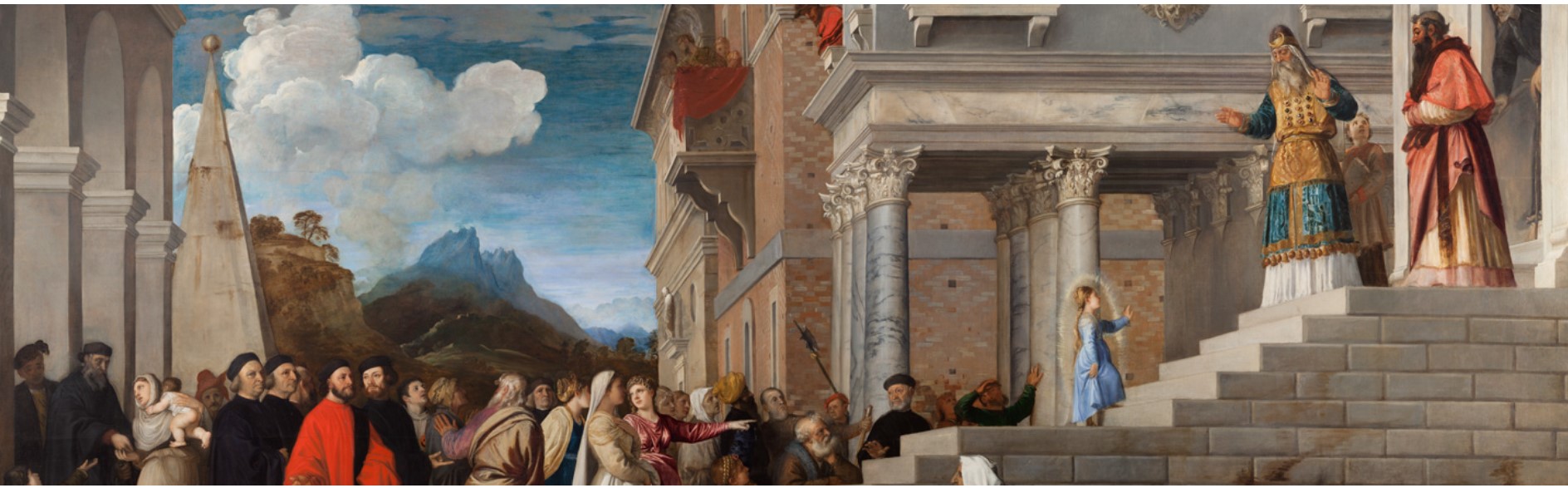
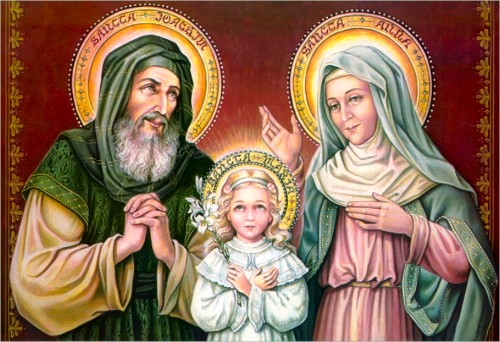
Now, My daughter, listen to Me: I had just turned three years old when My parents made known to Me that they wanted to consecrate Me to the Lord in the Temple. My heart rejoiced in hearing this—that is, consecrating Myself and spending My years in the house of God. But beneath My Joy there was a sorrow—for a privation of the dearest persons one can have on earth, which were My dear parents. I was little, I needed their maternal cares; I was depriving Myself of the presence of two great saints. Moreover, I saw that as the day approached on which they were to deprive themselves of Me, who rendered their lives full of joy and of happiness, they felt such bitterness as to feel themselves dying. But, though suffering, they were disposed to make the heroic act of taking Me to the Lord.
My parents loved Me in the order of God, and considered Me a great gift, given to them by the Lord; and this gave them the strength to make the painful sacrifice. Therefore, My daughter, if you want to have Invincible Strength to suffer the hardest pains, let all your things be in the Order of God, and hold them as precious gifts given to you by the Lord.
Now, you must know that I, with Courage, prepared Myself for My departure for the Temple, because, as I delivered My will to the Divine Being and the Supreme Fiat took Possession of My whole being, I acquired all Virtues as My own Nature. I was Dominator of Myself; all Virtues were in Me like many Noble Princesses, and according to the circumstances of My Life, they promptly showed themselves, to do their office without any resistance. In vain would they have called Me Queen, had I not possessed the Virtue of being Queen over Myself. Therefore, I had in My Dominion Perfect Charity, Invincible Patience, Enrapturing Sweetness, Profound Humility, and the whole endowment of the other Virtues. The Divine Will rendered My little earth of My humanity fortunate, always flowery, and without the thorns of vices.
Do you see then, dear daughter, what it means to Live of Divine Will? Its Light, Its Sanctity and Power convert all Virtues into one’s nature; nor does It lower Itself to Reign in a soul where there is a rebellious nature—no, no. It is Sanctity, and It wants the nature in which It must Reign to be Ordered and Holy. Therefore, by the Sacrifice of going to the Temple, it was Conquests that I made; and over this Sacrifice, the Triumph of a Divine Will was formed in Me. And these Triumphs brought into Me New Seas of Grace, of Sanctity and of Light—to the extent of feeling Happy in My Pains, in order to be able to Conquer New Triumphs.
Now, My daughter, place your hand upon your heart, and tell your Mama: do you feel your nature changed into virtue? Or, do you feel the thorns of impatience, the noxious herbs of agitations, the bad humors of affections which are not holy? Listen—let your Mama do it; place your will into My hands, determined in not wanting it any more, and I will make you be Possessed by the Divine Will, which will banish everything from you; and what you have not done in many years, you will do in one day, which will be the beginning of True Life, of Happiness, and of True Sanctity.
The soul:
Holy Mama, help your daughter; make a visit to my soul, and with Your Maternal hands, snatch from me everything You find which is not Will of God. Burn away from me the thorns, the noxious herbs, and You Yourself, call the Divine Will to Reign in my soul.
Little Sacrifice:
Today, to honor Me, you will call Me three times to visit your soul, and will give Me all the freedom to do with you whatever I want.
Ejaculatory Prayer:
Sovereign Queen, take my soul in Your hands, and transform it completely into Will of God.
Passages from
The Twenty-four Hours of the Passion of Our Lord Jesus Christ
Our Lord Jesus Christ
To the Servant of God, Luisa Piccarreta the Little Daughter of the Divine Will:
Third Hour – Reflections and Practices
The first word which loving Jesus pronounced on the Cross was a word of forgiveness, to justify all souls before the Father, and turn justice into mercy. So we will give Him our acts to excuse the sinner, so that, moved by our apologies, He may not allow any soul to go to hell. We will unite with Him as sentries of the hearts of creatures, so that nobody may offend Him. We will let Him pour out His love, willingly accepting all that He may dispose for us – coldness, hardness, darkness, oppressions, temptations, distractions, slanders, illnesses and other things, so as to relieve Him from all that He receives from creatures. It is not by love alone that Jesus pours Himself out to souls. Many times, when He feels the coldness of other creatures, He goes to the soul and makes her feel His cold, to release Himself through her. And if the soul accepts it, He will feel relieved from all the coldness of creatures, and this cold will be the sentry to someone else’s heart, to make loving Jesus loved.
Other times, Jesus feels the hardness of hearts in His own, and unable to contain it, He wants to pour Himself out, and comes to us. He touches our hearts with His Heart, making us share in His pain. Making His pain our own, we will place it around the heart of the sinner in order to melt his hardness, and take him back to Him.
My beloved Good, (Jesus), You suffer greatly because of the loss of souls; and out of compassion I place my being at your disposal. I will take your pains and the pains of the sinners upon myself, leaving You relieved, and the sinner clinging to You.
O my Jesus, please, let my whole being be melted in love, so that I may be of continuous relief, to soothe all Your bitternesses.
Seventh Hour
And now, O Mama, let us take this Blood (Jesus has shed in the Garden of Gethsemani) and let us give It to all: to the afflicted, that they may receive comfort; to the poor, that they may suffer resigned to their poverty; to those who are tempted, that they may obtain victory; to the disbelieving, that the virtue of Faith may triumph in them; to the blasphemers, that they may turn the blasphemies into benedictions; to the priests, that they may understand their mission and be worthy ministers of Jesus. With this Blood, touch their lips, that they may say no words which are not of glory to God; touch their feet, that they may let them fly to go in search for souls to lead to Jesus.
Let us give this Blood to the leaders of the peoples, that they may be united among them, and feel meekness and love for their subjects.
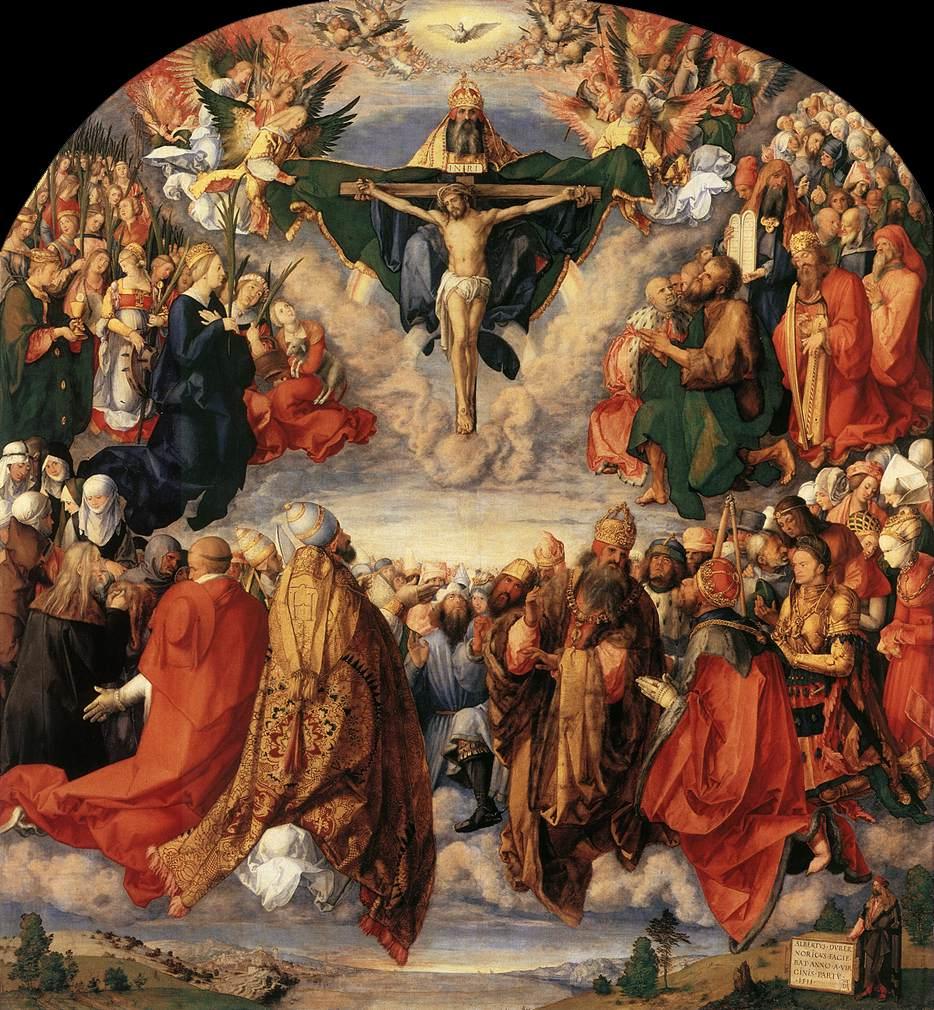
Let us fly now into Purgatory, and let us give It (the Blood of Jesus) also to the purging souls, because they so much cry for and claim this Blood for their liberation. Don’t You hear, O Mama, their moans, the fidgets of love, the tortures, and how they feel continuously drawn to the Highest Good? See how Jesus Himself wants to purge them more quickly in order to have them with Himself. He attracts them with His love, and they requite Him with continuous surges toward Him. But as they find themselves in His presence, unable to yet sustain the purity of His Divine gaze, they are forced to draw back and to plunge again into the flames!
My Mama, let us descend into this profound prison, and pouring this Blood over them, let us bring them light; let us calm their fidgets of love; let us dampen the fire that burns them; let us purify their stains; and so, free of every pain, they will fly into the arms of the Highest Good. Let us give this Blood to the most abandoned souls, that they may find in It all the suffrages that creatures deny to them. To all (the purging souls), O Mama (Blessed Mother), let us give this Blood; let us not deprive any of them, so that, by virtue of It, all may find relief and liberation.Be Queen in these regions of crying and of lamentations; extend Your maternal hands and, one by one, take them out of these ardent flames, and allow them all to take flight toward Heaven.
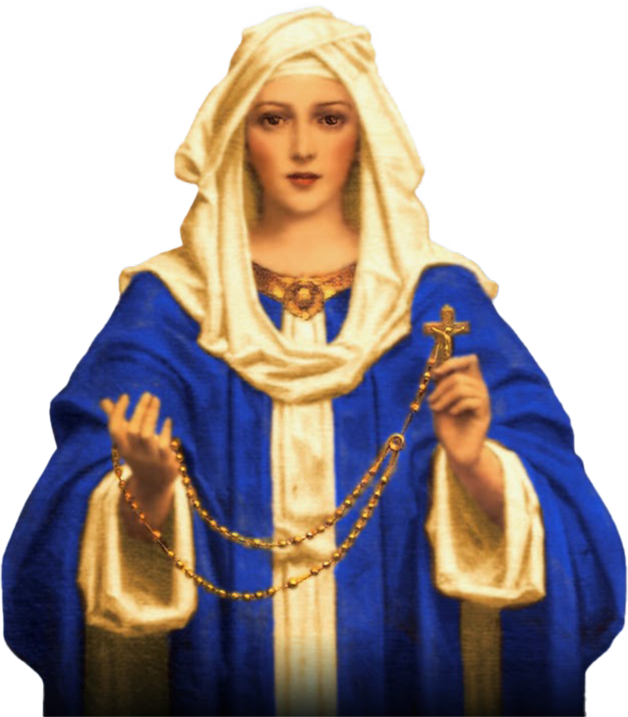
Our Lady of the Rosary, also known as Our Lady of the Most Holy Rosary, is a title of the Blessed Virgin Mary in relation to the Rosary. The Feast of Our Lady of the Rosary is on October 7, the anniversary of the decisive victory of the combined Christian fleet in 1571 at the Battle of Lepanto, defeating an Ottoman fleet off western Greece. It was formerly sometimes known as the Feast of Our Lady of Victory.
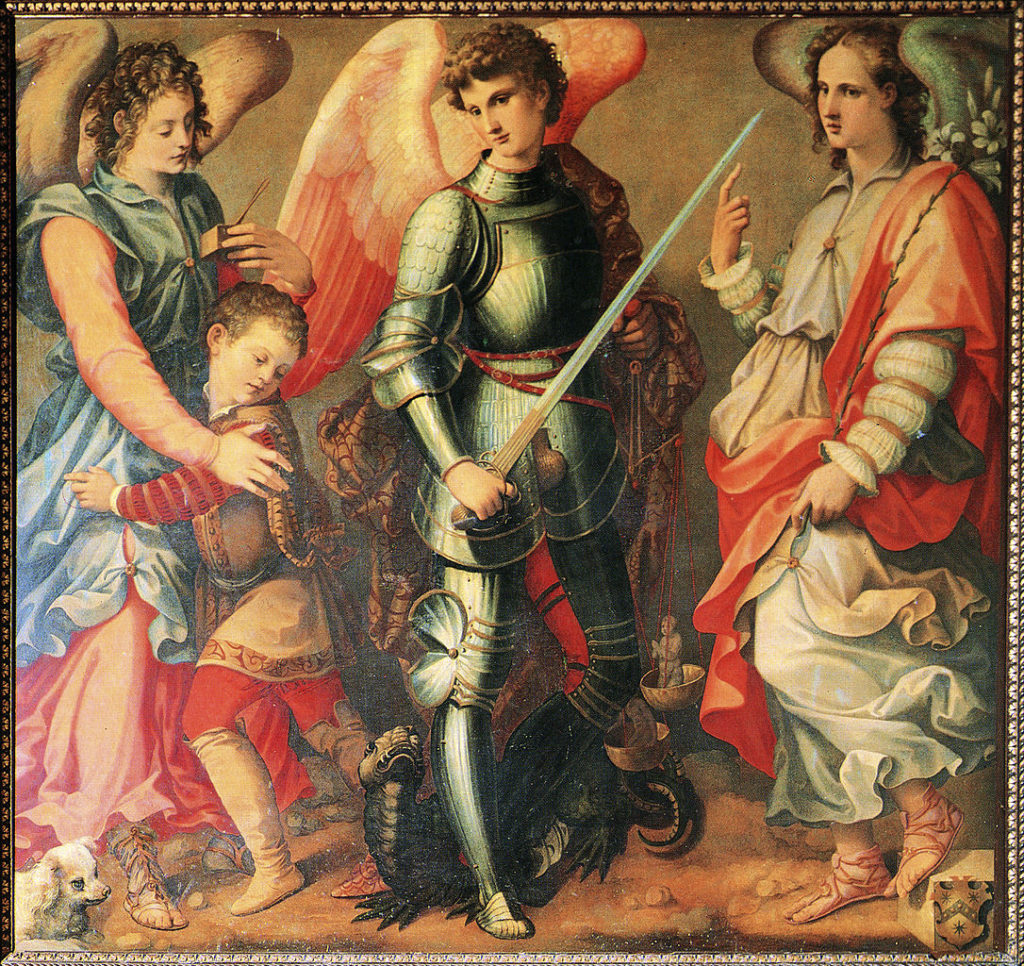
The three Archangels Michael, Gabriel and Raphael are the only Angels named in Sacred Scripture.
The Servant of God, Luisa Piccarreta the Little Daughter of the Divine Will, had a great love and respect for the Angels, evidenced by her prayer written when she was given the obedience to write her spiritual diary.
Thus Luisa begins Volume One in the “Book of Heaven, The Call of the Creature to the Order, the Place and the Purpose for which He was Created by God“:
In the name of the Father, of the Son and of the Holy Spirit.
Out of pure obedience, I begin to write.
You know, O Lord!, the sacrifice it costs me, such that I would submit myself to a thousand deaths rather than write one single line of the things that have passed between me and You. Oh my God!, my nature trembles, it feels crushed and almost undone at the mere thought of it. O please!, give me strength, oh Life of my life, that I may do the holy obedience! . . .
. . . Most Holy Virgin, lovable Mother (The Blessed Mother), come to my aid, obtain for me from Your sweet Jesus and mine, grace and strength in order to do this obedience. Saint Joseph, my dear protector, assist me in this circumstance of mine. Archangel Saint Michael, defend me from the infernal enemy, who puts so many obstacles in my mind to make me fail this obedience. Archangel Saint Rafael and you, my Guardian Angel, come to assist me and accompany me, and to direct my hand, that I may write nothing but the truth. . . .
Before 1927, the writings of Luisa (the first 19 Volumes and The Hours of the Passion), had already obtained the “Nihil Obstat” from the now Saint, Annibale Maria di Francia (Censor on behalf of the Archdiocese) and the Imprimatur of the then Archbishop Mons. Giuseppe M. Leo.
In addition to this previous study, the Congregation for the Saints, conforming to the canonical normative and actual praxis establishes that the writings of a Servant of God should be submitted for examination by at least two theological Censors (whose names would remain secret); this should be completed before formally initiating the process at the level of the Holy See.
As this work on the writings had not taken place within the diocesan process, the Dicasterio ordered the completion of this requisite with the intention to be able to issue the decree on the legal validity of the diocesan investigation and in this manner initiate the Roman process. The theological Censors, named by the Church, must examine the writings and verify that there is nothing in them contrary to faith and tradition, and must also describe in their verdict the personality and the spirituality of the Servant of God.
The Holy Congregation for the Saints assigned this work to two theological Censors, asking their evaluation. After almost three years, I ANNOUNCE TO YOU TIDINGS OF GREAT JOY:
Corato (Italy), July 23, 2010. Sister Assunta Marigliano, President of the Píous Association “Luisa Piccarreta – Little Daughter of the Divine Will” with its seat in Corato, Italy, who is responsible for the promotion of the Cause for Beatification and Canonization of the Servant of God Luisa Piccarreta; unofficially disclosed today grand news in relation to the Cause of Luisa, which fills us with great joy:
It was learned today that ALSO the second theologian appointed by the Holy See for the evaluation of the writings of the Servant of God Luisa Piccarreta, has completed his assessment and has Officially Rendered his Verdict: POSITIVE. The results of this assessment, is in itself a Recognition of the Purity of the Doctrine of the Divine Will Manifested in these Writings.
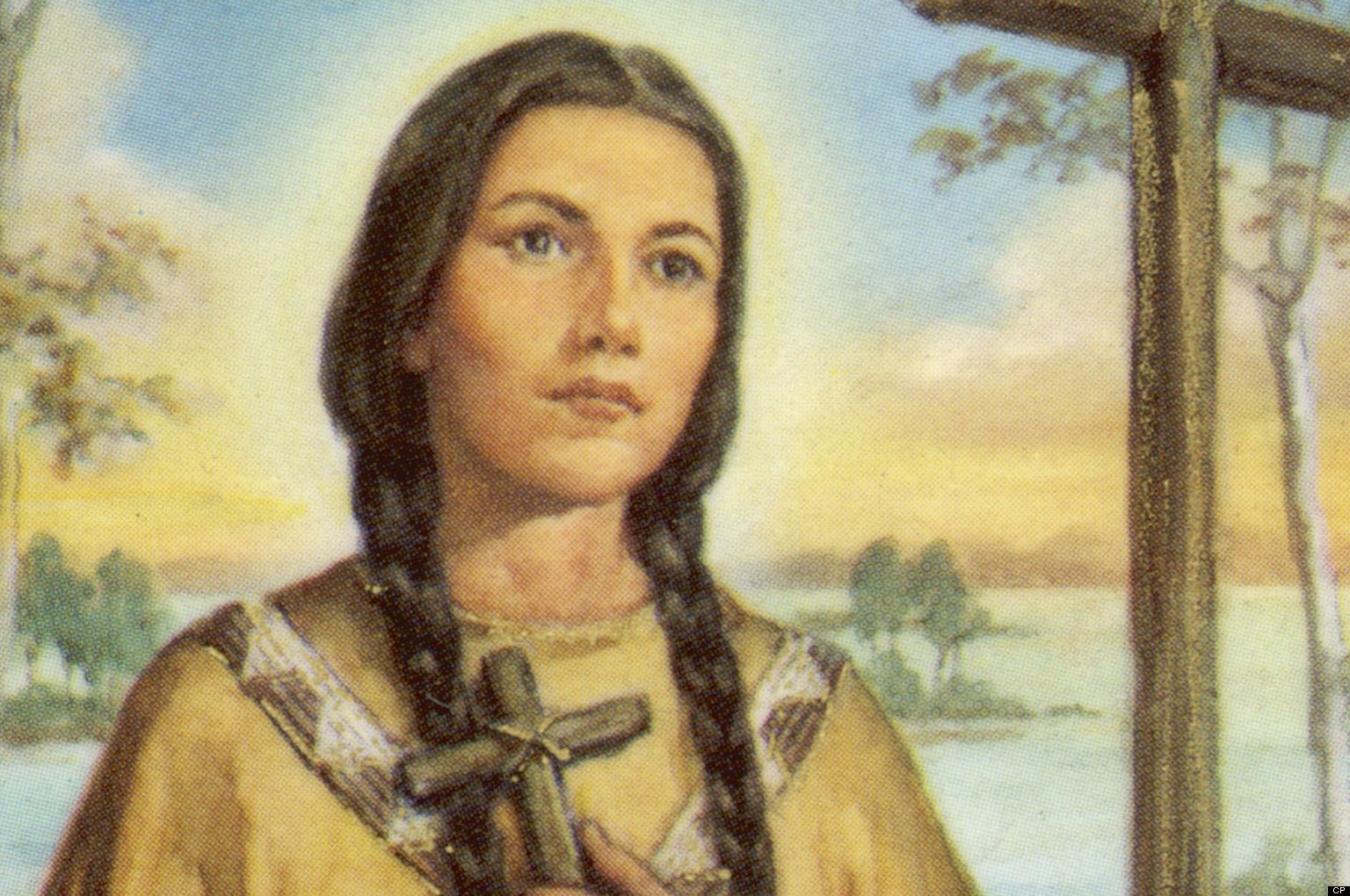
Flower of the Algonguins
Lily of the Mohawks
1656-1680
Feast Day
14 July in the United States
17 April in Canada
KATERI (CATHERINE) TEKAKWITHA Saint of Iroquois/Algonquin descent. Fleeing persecution, she settled in Quebec, where she devoted her life to God. Date: 1656 – 1680 Source: Prayer card
Saint Kateri Tekakwitha,
Model of Fidelity Against Religious Persecution
“Today the Church needs saints. This calls for our combating our attachment to comforts that lead us to choose a comfortable and insignificant mediocrity. Each one of us has the possibility to be a saint, and the way to holiness is prayer. Holiness is, for each of us, a simple duty.” St. Mother Teresa
The true American heroes are not sport or entertainment figures, but Catholic saints. We should turn our “lonely eyes” to them and follow their good examples, virtues and works. They are our true friends and are alive in heaven with God. They are models of holiness for us. They can help us just like friends on earth by their prayerful intercession on our behalf. They give us courage and hope.
July 14 is the feast of one of our saints of the states, St. Kateri Tekakwitha. Let our nation turn its lonely eyes to her for courage and hope. Pope Benedict XVI canonized her at St. Peter’s square in Vatican City October 21, 2012.
The blood of the martyrs is often the water that sprouts the seed of the Catholic faith. The blood of the only martyrs of the United States, Saints Isaac Jogues, Rene Goupil and Jean de la Lande, watered the seed of the faith in the Mohawk Village at Auriesville, New York. Kateri Tekakwitha was born there in 1656, ten years after they were martyred there. Kateri’s Baptism
Kateri lived in the Mohawk Village with her uncle, the chief of the Turtle Clan, after her parents died from smallpox when she was four. The smallpox left her disfigured with impaired vision. “Tekakwitha” in Mohawk means “one who puts things in order” or “one who feels her way”, because Kateri had to feel her way with her poor eyesight in the darkened lodges. She often stayed in the Longhouse because the sunlight hurt her eyes.
She fell in love with Jesus and decided to remain a virgin. Virginity was unheard of amongst the Indians and they pressured her to marry and to work on Sunday, but she refused to do so. When they connived to have her lodge visited by a young warrior in the hopes of their union, she turned him out. Then the Indians treated her as a slave and put her to work for the village.
In 1666, the French attacked and burned down Kateri’s village. The Mohawks built a new village on the north side of the Mohawk River at Fonda (Caughnawaga), New York. Here Kateri first heard of the Catholic faith from Father Jacques de Lamberville, a French Jesuit, who occasionally visited her village at St. Peter’s Mission. He baptized her on April 18, 1676 and she took the name Catherine that the Mohawks pronounced “Kateri”.
The other Mohawks persecuted her for her faith. They mocked her devotion to Our Lady and her recitation of the Rosary. Kateri was not deterred, but to avoid the persecution she escaped in 1677 with some companions from the village to Canada. She trekked north through New York and paddled Lake Champlain to Sault Saint-Louis, a Christian Indian Mission near Montreal on the St. Lawrence River. Her journey took over two weeks, traveling by foot and canoe about three hundred miles through woods, rivers, swamps and lakes.
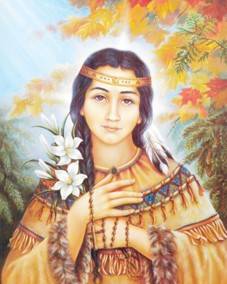
The Lily of the Mohawks
At the Mission, Kateri lived a life dedicated to prayer, penitential practices and care for the sick and aged. Her day at the Mission began at 4 a.m. each morning in church where she remained for several hours of prayer and Masses. She helped the sick and the poor. She formed a group called the Slavery of the Blessed Virgin and they fasted and endured exposure to the cold in the woods as acts of penance. On March 25, 1679, Kateri was permitted to make a vow of perpetual virginity.
Kateri was a half-blind, pockmarked orphan Indian maiden. She was little more than a slave in her own clan, but in God’s eyes she was His pure daughter and a model for her race. Many Indians followed her good example and converted. Kateri received the Eucharist with the greatest devotion. Father Pierre Cholenec, who prepared her for her First Communion said, “Only God knows what passed between Himself and His dear Spouse.”
Kateri attended daily Masses at 5 a.m. and 7 a.m. and visited the Blessed Sacrament five times daily, after her daily visitations to the sick and the poor. During her own last sickness, she dragged herself to Mass until she could no longer walk. She died at the age of 24 on April 17, 1680 in the presence of Father Cholenec and all of her pox marks disappeared. He said that at the time of her death Kateri’s face “… so disfigured and so swarthy in life, suddenly changed about fifteen minutes after her death, and in an instant became so beautiful and so fair that just as soon as I saw it (I was praying by her side) I let out a yell, I was so astonished.”
Two hundred and ninety three years later on the very same date, April 17, 1973, young Peter McCauley’s hearing was spontaneously restored through Kateri’s intercession. This was the miracle that led to her beatification by Pope John Paul II on June 22, 1980.
Pope Benedict XVI canonized Kateri on October 21, 2012. He called St. Kateri the “protectress of Canada and the first Native American saint” and he entrusted to her “the renewal of the faith in the First Nations and in all of North America.”
Archbishop Charles J. Chaput of Philadelphia, who is of American Indian descent, said, “I think many young people today are embarrassed about embracing the Catholic faith because they live in a secular culture that’s hostile toward religious experience. St. Kateri also grew up in a place where there was great hostility toward Christianity, but she resisted all efforts to turn her away from her faith, so in some ways she would be a model of fidelity in the face of persecution on religious freedom grounds.”
Kateri’s Feast Day is July 14. Because of her purity, she is known as the “Lily of the Mohawks.”

 She fell in love with Jesus and decided to remain a virgin. Virginity was unheard of amongst the Indians and they pressured her to marry and to work on Sunday, but she refused to do so. When they connived to have her lodge visited by a young warrior in the hopes of their union, she turned him out. Then the Indians treated her as a slave and put her to work for the village.